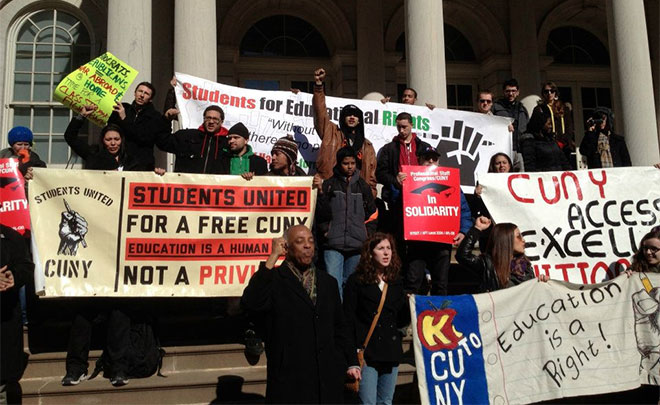
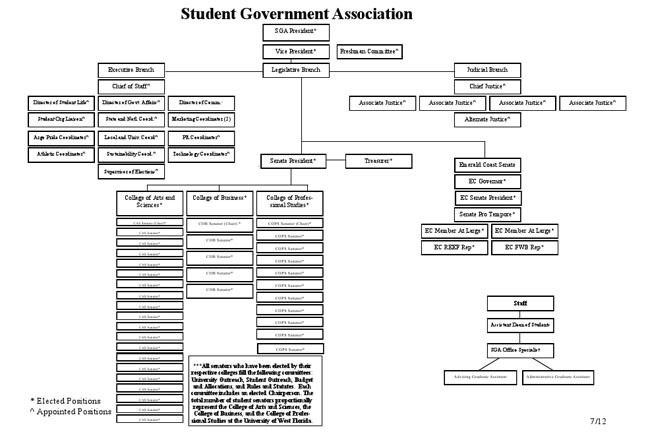
Most student governments with large enough budgets pay their members - usually executive positions, but sometimes members of the student legislature are compensated too. Their stated purpose is foremost explained as a way to make sure working class students aren't shut out of student government roles. Stipend use is an easy fix, and as with most easy fixes, it's also a shoddy one.
They are usually too small to be effective, and still wind up as play money for elites
Many of the stipends I've seen are entirely too small to replace even one of the several jobs that most working class students have in order to afford school. And even when they are large enough, stipends are never pegged to the office holder's income and wealth - a task that'd just take a stroll to the Financial Aid office to determine. So therefore the upper class kids who have the time and resources to actually campaign for office get this money as just another perk of the office (and for the Future Bureaucrats of America™, that's a lesson they learn quickly). It also means incumbents have yet another material advantage over challengers. If there is a student government that does have a sliding scale stipend, please let me know. I'd love to learn more about it.
Student organizers with the Student Power Party screened a portion of the high-budget porn/satire "Pirates II: Stagnetti's Revenge" last night, after a panel discussion on censorship and free speech.
The film was originally to be screened last week in the theater of the student union in conjunction with a talk about safe sex - but once Maryland state legislators in heard about it, conservative lawmakers headed by State Senator Andrew Harris threatened to pull all $400+ million of state funding to the school if it went ahead with the screening. UMD Administration was all too happy to comply, all the while insisting that they did it of their own accord.Baltimore Sun:
Linda Clement, vice president for student affairs at Maryland, said the decision to cancel the film was her own and based on a variety of factors.
"I think people were concerned about portrayal of women, concerned about violence, concerned about our students and decision-making processes," she said. "We were losing sight of the educational value that might come from some kind of exercise like this, so it just seemed like the best thing to do."
Clement said it was appropriate for state lawmakers to be debating what films a university shows on campus. "I think state legislators have the right to weigh in on many, many issues regarding state agencies," she said.
As Marc Fisher of the Washington Post put it, "At the University of Maryland yesterday, the school's top brass faced a classic test of their allegiance to the ideals of open inquiry, freedom of speech and academic independence. They flunked big time."
While the UMD bureaucrats were scrambling to kiss rings in Annapolis, student organizers seized on the moment to give everyone an object lesson in freedom of speech and student power. Members of the Student Power Party reserved a large room and screened the first half hour of Pirates II, after a rousing panel discussion by UMD professors and a lawyer for the ACLU.
This was certainly a victory for student power and direct action - "you won't screen the film? Then we will!" And this was also a great example of the Streisand Effect: that is, attempts to censor something often only result in many more people hearing about and seeing it. Student organizers also did a wonderful job with messaging and media strategy. If Student Power Party members win the UMD student government elections going on today and tomorrow, this may be a hint of what an energized, aggressive SGA will look like.
State Sen. Harris, who despite his best efforts is left with egg on his face, is now arguing that the Regents should come up with a policy regarding pornographic movie screenings on campus. Of course, he's clear as to what he wants that policy to be. As the Washington Post reported, "Harris said the university pornography policy should require that 'you can't have university-sponsored XXX entertainment on campus.'" Thankfully as a Republican he doesn't have a lot of legislative clout in the legislature, and everyone involved knows that University funding isn't in jeopardy. It's telling, however, that the group of people most aware of this fact, the Administration, were also the first to abandon free expression on campus. And from the start that's what this controversy has always been about: it hasn't been about pornography itself (which I'm sure most everyone has strong opinions regarding), but about how deep into campus affairs government officials can reach and meddle.
Here's a great example of students taking matters into their own hands, and bypassing "authorized" methods of student participation (student government/council).
I was recently forwarded this article. It was written in '75 by a Dean of Students, but I think it deserves a hard look. As we craft what our future universities will look like, we should be open to the lessons and advice of the past. I also got a kick out of him mentioning student syndicalism -- to think that a Dean would even mention such a concept, even in the '70s! -- Patrick
Alternatives to Traditional Student Government
DON CREAMER
(DON CREAMER is dean of students, El Centro College, Dallas, Texas.)
What is the future of student government? One does not need to be a mystic nor a soothsayer to predict with frightening accuracy the essential work of most student government organizations. Likely, sporadic tinkering with local issues of some inane nature will occur, but three things almost universally will come to pass. These things happen almost everywhere, and they happen with tiring regularity.
First, students will attempt to re-write the constitution. Unfortunately, this venture likely will succeed, thus giving next year's junta all the more reason to re-write it again. Second, students will quarrel about quorums. Are enough of us here (according to the current constitution, of course) to decide on whatever issue has bubbled to the surface? Third, students will argue about "territorial rights" and exclusive domain prerogatives. This argument usually boils down to the question, "When are we ever going to get our own sandbox to play in around here?" When these symptoms become apparent to the leadership of an institution concerned with education, then it is time for a change.